- About
-
-
- The Shaar
-
-
- Prayer
-
-
- Media
-
-
-
- Life
-
-
- Lifecycle
Events
-
-
- Venues
-
-
-
-
- Community
-
-
- Adult Engagement
-
-
- Youth and
Young Families
-
-
- Tikkun Olam
-
-
-
-
- Music
-
-
- SH’MA
-
-
-
- Learning
-
-
- Adult Education
-
-
-
-
- Calendars
-
-
- Calendar
-
-
-
- Daily Services
- Login
- Become a member

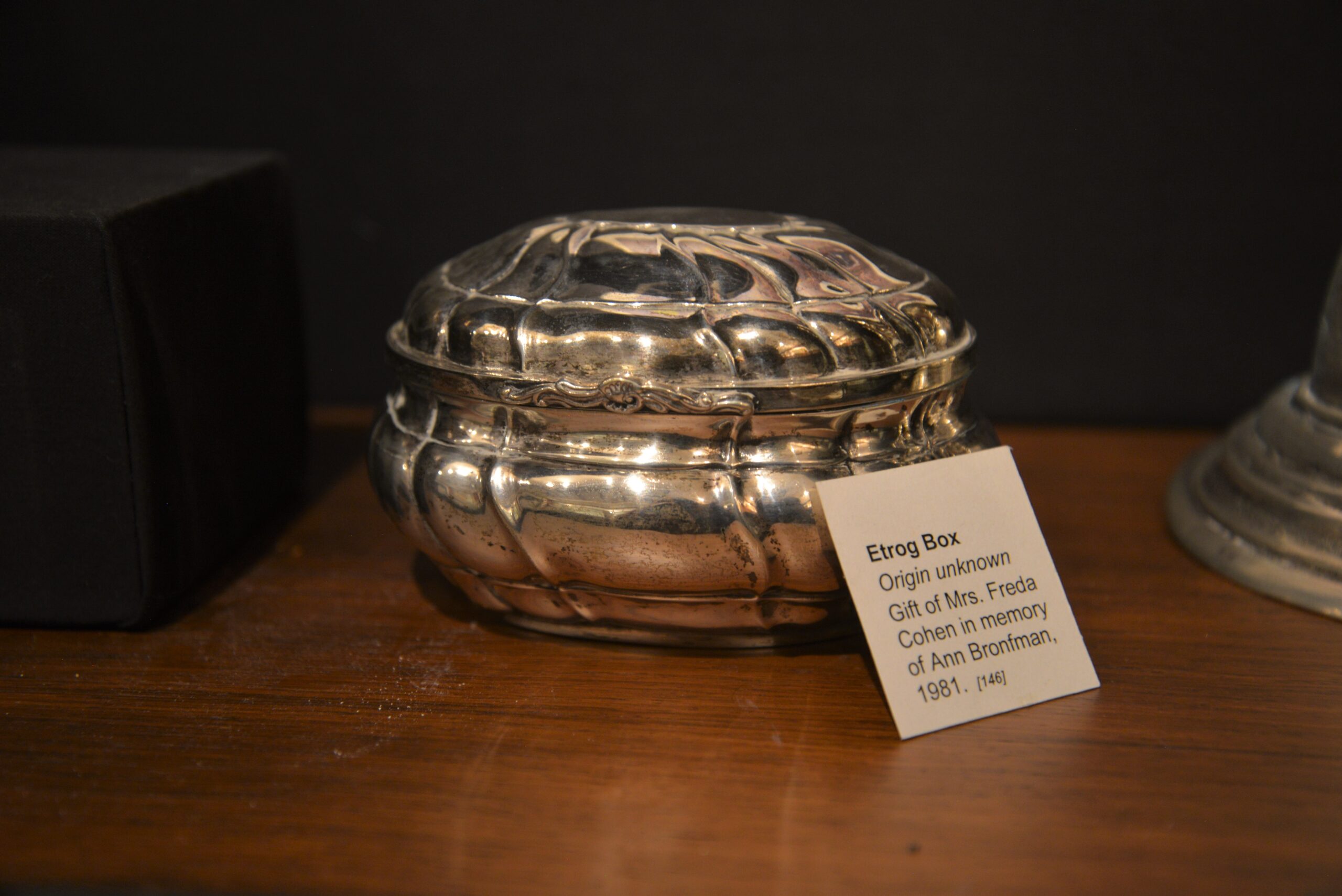
As we head into Sukkot, amid the rush to put up and decorate their sukkahs, many Jews will also be pulling out their etrog boxes. Since the etrog must be in near-perfect condition and is rendered unusable on the holiday if damaged, these boxes prove useful in maintaining the beautiful condition of the fruit. Their designs range from simple to intricate, signifying and enhancing the beauty of the etrog itself, as a form of ḥiddur mitzvah (‘beautification of a mitzvah’). The Shaar Hashomayim Museum collection contains a number of elegant historical and contemporary etrog boxes.
These three etrog boxes, each made of silver, show an interesting range in etrog holder design. While the origin of one of the boxes is unknown, the others were produced in different parts of the Jewish world—Eastern Europe and the Middle East. The first box is designed to appear as an etrog itself, as seen in the gilded pattern and the pitom (stem) at the top. The second box, which has a more common design, resembles a jewelry box, indicating the great value of the contents it is intended to protect. Especially unique, though, is the peacock design, which is a common motif in Jewish art. The craftsmanship is complicated and intricate: the bird is largely filigreed—a notably difficult and delicate form of metalwork which is lace-like in its appearance. This, of course, renders the box partially transparent. When an etrog is placed in this box, the sophisticated design would surround the fruit—making it appear like a crown jewel!